

Honey processed coffee: what yellow, red, black and hydro really mean
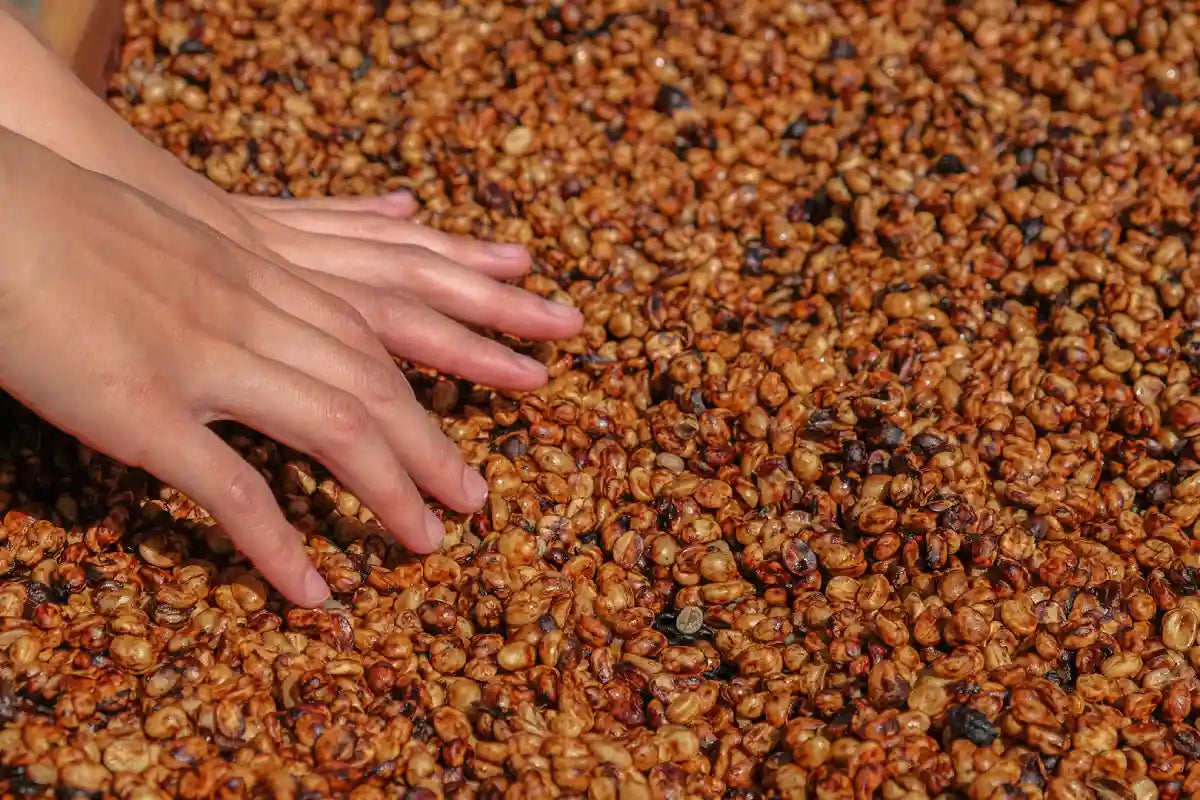
Honey processed coffee contains no bee honey and no added sweetener. The name refers to the sticky mucilage left around the seed while it dries. How much of it stays, and how slowly the lot dries, shapes sweetness, body and clarity in the cup.
That single detail explains most of the confusion on the shelf. Buyers read “yellow honey” or “black honey” on a bag and assume it’s flavored coffee. In reality, those terms describe decisions made at the farm. This guide compares each style, explains hydro honey, and shows what to check before you pay.
What honey processed coffee actually is
Honey process sits between washed and natural. First, pickers select ripe cherries. Then a depulper removes the skin and most of the fruit. However, the machine is calibrated to leave part of the coffee mucilage attached to the seed. That layer dries in place, still wrapped in parchment.
Mucilage is rich in sugars and plant material. Because of that, microorganisms feed on it during controlled fermentation. Meanwhile, parchment drying continues on raised beds or patios. As a result, drying does two jobs at once: it stabilizes the lot and drives sweetness development.
In practice, the sequence is easy to picture in five steps:
-
Harvest of ripe cherries, selected by hand.
-
Depulping to remove skin and pulp.
-
Sticky mucilage retained on the parchment.
-
Controlled drying, with the beans turned regularly.
-
Green coffee, milled and ready to roast.
Notice what is missing from that list. No sweetener enters the process at any point. Therefore, when a honey processed coffee tastes sweet, that sweetness comes from the fruit layer and the way it dried.
Why yellow, red and black honey are not the same process
The colors are shorthand for two variables: how much mucilage stays on, and how fast the coffee dries. Consequently, the cup moves along a predictable scale. Here is the general direction of each style:
-
Yellow honey keeps less mucilage and dries faster, so the cup usually reads cleaner and lighter.
-
Red honey keeps more mucilage and dries more slowly, which tends to add sweetness and body.
-
Black honey keeps the most mucilage and dries slowest, so expect fuller body and a stronger fruit-forward profile.
The numbers behind those labels are worth knowing. Producers often describe yellow honey at roughly 25 % mucilage retention, red at about 50 %, and black at close to 100 % (La Tienda del Café, 2023). Drying time follows the same curve, moving from about 8 to 10 days for yellow up to three weeks for black (JayArr Coffee, 2026).
Still, these labels for honey processed coffee are not standardized. Shade, humidity, altitude and turning frequency all vary between farms. In other words, one roaster’s red honey can behave like another’s yellow. For that reason, read the producer’s own explanation instead of trusting the color alone.
What makes hydro honey different from other honey styles
Hydro honey is the newest term on this list and also the least standardized. Broadly, it borrows stages from natural processing and the honey process, then adds a water step. A common version runs like this:
-
The whole cherry begins drying or fermenting, as in a natural.
-
The fruit is rehydrated in water for a set number of hours.
-
The softened cherry is then depulped.
-
The seed finishes drying with mucilage still attached.
The logic is layering, and it pushes honey processed coffee further toward fruit. Early cherry contact builds fruit character, while the honey stage adds texture and roundness. However, no universal recipe exists. So a serious roaster should describe the exact steps its producer used, rather than repeating a generic definition. If a bag says “hydro honey” and explains nothing else, that silence tells you something.
How to choose honey processed coffee by the cup you want
Once the mechanics are clear, the choice gets simpler. Rather than chasing the rarest label, start from the cup you actually enjoy:
-
Choose yellow honey when you want clarity and a lighter, more transparent expression.
-
Explore red honey when you want balance between sweetness, body and definition.
-
Try black honey when you prefer weight in the mouth and stronger fruit intensity.
-
Consider hydro honey when the producer clearly explains each stage of the combined process.
-
Look at a washed lot instead if you want the cleanest, most linear profile available.
These are tendencies, not guarantees. Variety, origin, ripeness, fermentation, roast level and brewing all shape the final result. Two black honey lots from the same region can taste very different, and both can be excellent.
What to check before you pay for honey processed coffee
Price alone says little. Instead, what makes coffee premium is traceability plus a process the roaster can actually describe. Before buying, scan the bag for these details:
-
Honey color or style, which signals the producer’s chosen variation.
-
Mucilage retained and drying conditions, since both explain fermentation risk and control.
-
Producer, farm and origin, whether the lot comes from Oaxaca, Veracruz or a Chiapas coffee region.
-
Variety and altitude, which add context to the sensory profile.
-
Flavor notes, so you can match the lot to what you already like.
-
Ingredient list, because a real honey process bag lists only coffee.
Roast date belongs on that list too. After all, freshly roasted coffee protects the aromatics that drying worked so hard to build. Once the bag is open, store it away from air, moisture, heat, and light, as the National Coffee Association recommends. Otherwise, the sweetness you paid for fades fast.
Assumptions about honey processed coffee worth dropping
A few myths keep circulating, and they cost people money. Consider these before your next order.
-
Honey was added to the beans. Nothing is added; the name describes the mucilage texture.
-
Black honey is always sweeter than yellow. Slower drying increases intensity, not guaranteed sweetness..
-
Every producer uses the same color definitions. They do not, and the gaps are wide.
-
A harder process automatically means a better coffee. Risk is not quality; execution is.
Understanding those four points changes how you read a shelf. Moreover, it moves your attention from packaging toward process, which is where the real information lives.
Huupa’s Bourbon Typica shows the process in the cup
Our specialty Bourbon Typica is a honey-process microlot from Santiago Atitlán, Oaxaca, produced by Wilfrido Martínez. Its declared profile includes red apple, cranberry, cane-sugar sweetness, bright acidity and a smooth, syrupy body. Part of that texture traces back to the mucilage preserved during drying.
We then roast it over mesquite from the Sonoran Desert. That wood-fired method is uncommon in the United States, and it gives our Mexican lots a distinct profile without masking origin character. In short, the farm builds the sweetness and the roast keeps it legible.
Taste the process instead of imagining honey was added. Discover the character of Bourbon and Typica coffee and see how retained mucilage supports sweetness, bright fruit and a syrupy texture.
Buy the cup, not the color on the bag
Honey process is not a flavoring. It is a drying decision with real consequences for sweetness, body and clarity. Yellow, red, black and hydro honey each move those variables differently, though the labels remain loose across farms.
Looking for a new coffee experience? Discover what honey processed coffee can bring to the cup, from balanced sweetness to distinctive flavor. Explore HUUPA’s limited specialty lots and find a release that matches your taste.
References
- Bernal, N. (2026). Procesos de beneficiado del café: lavado, natural y honey. San Jorge Café.
- Cafés sin Filtro. (2026). Café proceso honey: qué es, a qué sabe y por qué es el equilibrio perfecto en tu taza.
- Cafés sin Filtro. (2026). Café honey: qué es, a qué sabe (y por qué no tiene nada que ver con miel).
- Cuatro Caminos Coffee Estates. (2024). Red, black and yellow honey processed coffee.